Urgent Care & Walk-ins are Welcome!
The liver is one of the hardest working organs in a dogs or cats body. It helps process nutrients, supports digestion, stores energy, removes waste from the bloodstream, and plays an important role in metabolism. Because the liver performs so many jobs, liver problems can affect many parts of a pets health.
One challenge is that liver disease may develop quietly. Some pets show only subtle changes at first, such as reduced appetite, lower energy, or gradual weight loss. Others may develop more noticeable signs as the condition progresses. This is why veterinary diagnostics can be an important part of identifying liver concerns before they become more complicated.
For pet parents in Bentonville, understanding how vets test for liver disease in pets can make the diagnostic process feel much less confusing. Testing usually involves several pieces of information rather than one single test. Your veterinarian may combine a physical examination, bloodwork, imaging, and other diagnostic procedures to understand how the liver is functioning.
What Does the Liver Do for Pets?
The liver has many responsibilities throughout the body. It helps process nutrients absorbed from food and supports normal digestion. It also helps break down certain substances, stores important nutrients, and produces proteins involved in normal body functions.
When liver function becomes impaired, these processes can be affected. The signs can vary depending on the type of liver problem, how quickly it develops, and how much liver function has been affected.
Possible signs include:
- Reduced appetite
- Weight loss
- Vomiting
- Diarrhea
- Increased thirst or urination
- Low energy
- Yellowing of the gums, eyes, or skin
- Abdominal swelling
- Changes in behavior
- Increased bleeding or bruising
These signs can occur with many other health conditions, so they do not automatically indicate liver disease. Diagnostic testing is needed to determine what may be causing them.
How Vets Begin Testing for Liver Disease
The first step is usually a complete physical examination and review of the pets medical history. Your veterinarian may ask about appetite, weight changes, medications, diet, activity, digestion, and any unusual behaviors.
During the examination, the veterinary team may evaluate the abdomen, gums, body condition, hydration, and other physical indicators.
This information helps determine which tests may provide the most useful answers. In some cases, routine wellness testing may reveal a liver related abnormality even when a pet seems healthy.
Bloodwork Can Provide Important Clues
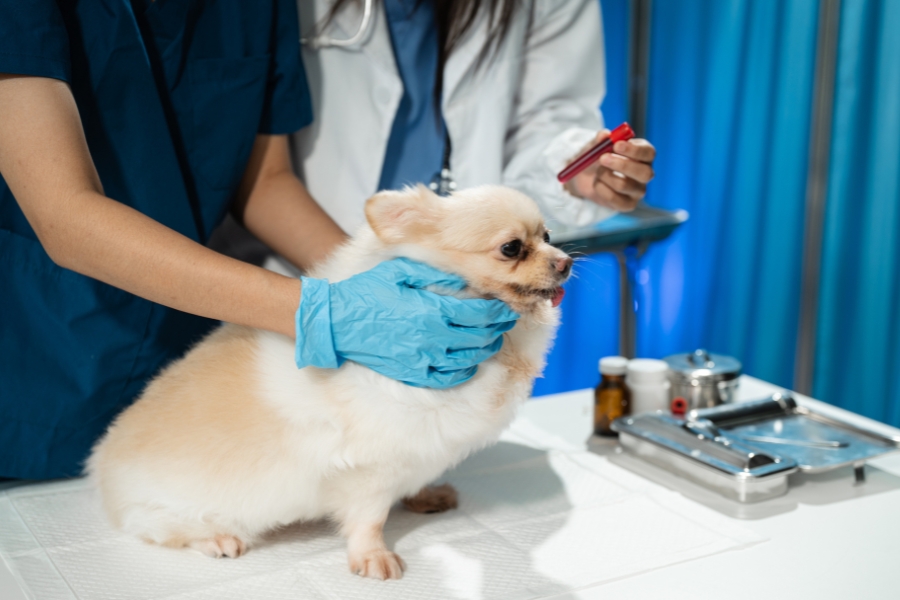
Blood testing is one of the most common tools used when veterinarians investigate possible liver disease. A chemistry panel can measure substances associated with liver function and other body systems.
Liver related enzyme changes can indicate that liver cells or the structures surrounding them may be under stress. However, elevated enzymes do not automatically confirm liver disease.
This is an important point for pet parents to understand. Bloodwork provides clues, not always a final diagnosis.
Your veterinarian may compare multiple values and consider them alongside your pets age, symptoms, history, and physical examination. Other blood values can also provide information about how well the liver is performing its normal functions.
What Liver Enzymes Tell Veterinarians
Several enzymes may be included in a pets blood chemistry profile. Changes in these values can occur for different reasons.
For example, an enzyme may increase because of liver cell injury, bile flow problems, certain medications, hormonal conditions, or other diseases. Some enzyme changes can also be influenced by a pets age or species.
Because of this, vets test liver related blood values as part of a larger diagnostic picture. A single abnormal result does not necessarily mean that a pet has serious liver disease.
Your veterinarian may recommend repeating bloodwork or performing additional tests to determine whether an abnormal result is persistent and clinically meaningful.
Bile Acids Testing
Bile acids testing can provide additional information about liver function. Bile acids are produced by the liver and play an important role in digestion.
A bile acids test may involve collecting blood at specific times, sometimes before and after a meal. The results can help the veterinary team evaluate how effectively the liver is processing and circulating bile acids.
This test may be particularly useful when standard bloodwork does not provide a complete explanation for a pets symptoms.
Imaging Helps Vets Look at the Liver
Bloodwork can reveal changes, but imaging allows veterinarians to examine the liver itself.
Abdominal radiographs may provide information about the size and general position of the liver. Ultrasound can offer a more detailed view of the liver and surrounding structures.
With ultrasound, veterinarians can evaluate:
- Liver size and shape
- Liver texture
- Gallbladder appearance
- Bile ducts
- Blood vessels
- Nearby abdominal organs
- Abnormal growths or masses
Ultrasound can be especially valuable when bloodwork suggests that additional investigation is needed.
When a Liver Biopsy May Be Recommended
In some situations, bloodwork and imaging cannot determine exactly what type of liver disease is present. A liver biopsy may then be considered.
During a biopsy, a small sample of liver tissue is collected for microscopic examination. The sample can help identify certain types of inflammation, cellular changes, infections, abnormal tissue growth, or other conditions.
A biopsy is more involved than routine blood testing, so your veterinarian will consider the potential benefits and risks before recommending it. The decision depends on the individual pets symptoms and the information already obtained through other diagnostic procedures.
Why Veterinary Diagnostics Often Involve Multiple Tests
It can be tempting to expect one test to provide a simple yes or no answer. Liver disease does not always work that way. Different diagnostic tools answer different questions. Bloodwork can identify biochemical changes. Imaging can show physical changes. Specialized testing can provide additional information about liver function. Tissue analysis can sometimes identify the exact nature of a disease process.
By combining these findings, veterinarians can build a more complete picture of a pets health.
This step by step approach also helps distinguish primary liver disease from conditions that may affect the liver secondarily.
Early Testing Can Make a Difference
Pets can compensate for certain health problems for a surprisingly long time. By the time obvious symptoms appear, an underlying condition may have been developing for some time.
Routine veterinary examinations can help identify subtle changes before they become obvious at home. Bloodwork may be recommended based on age, medical history, symptoms, physical findings, or other risk factors.
Early investigation does not always mean that a pet has a serious condition. It simply gives your veterinary team more information to work with.
What Pet Parents Can Watch for at Home
Your observations can provide valuable information during a veterinary visit. Keep an eye out for changes that persist or gradually become more noticeable.
Important changes to discuss with your veterinarian include:
- Unexplained weight loss
- Persistent appetite changes
- Repeated vomiting or diarrhea
- Increased thirst
- Changes in urination
- Unusual tiredness
- Yellow colored gums or eyes
- Abdominal enlargement
- Changes in normal behavior
If you notice something unusual, write down when it started and whether it is becoming more frequent. This information can help your veterinarian decide which diagnostic tests may be appropriate.
Schedule Veterinary Diagnostics for Your Pet
If your pet has developed unexplained changes in appetite, weight, energy, digestion, or behavior, a veterinary examination can help uncover possible causes. Dogwood Trails Animal Hospital can evaluate your pets health and recommend appropriate veterinary diagnostics based on their individual needs.
A thoughtful diagnostic plan may include physical examination, blood testing, imaging, or additional evaluation when appropriate. Contact Dogwood Trails Animal Hospital to schedule an appointment and discuss your pets health concerns with the veterinary team.
Frequently Asked Questions
Q1. What is usually the first test for suspected liver disease in pets?
Ans: A veterinarian will typically begin with a physical examination and medical history, followed by bloodwork when appropriate. Chemistry testing can provide important clues about liver health and function.
Q2. Can normal bloodwork completely rule out liver disease?
Ans: Not always. Some liver conditions may not produce obvious changes on routine bloodwork, particularly during early stages. Your veterinarian may recommend additional testing based on your pets symptoms and examination.
Q3. Why would a veterinarian recommend an abdominal ultrasound?
Ans: An ultrasound allows the veterinary team to examine the liver, gallbladder, bile ducts, blood vessels, and nearby abdominal structures. It can help identify physical changes that bloodwork cannot show.
Q4. Does every pet with abnormal liver enzymes need a biopsy?
Ans: No. A biopsy is not automatically needed for every abnormal result. Your veterinarian will consider bloodwork, symptoms, imaging findings, medical history, and other factors before deciding whether tissue testing would be useful.
Q5. What signs of liver disease should pet owners watch for?
Ans: Possible signs include appetite changes, weight loss, vomiting, diarrhea, increased thirst or urination, low energy, yellowing of the eyes or gums, abdominal enlargement, and behavior changes. These signs can have many causes, so veterinary evaluation is important.